Cortland
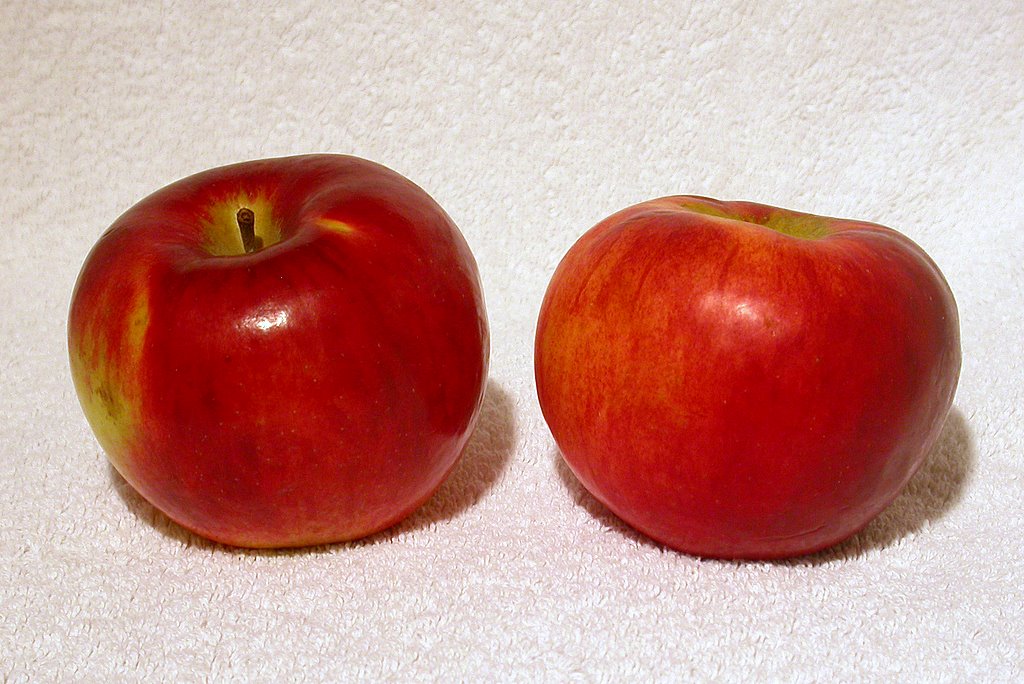 Photo: No machine-readable author provided. Abrahami assumed (based on copyright claims). / Wikimedia Commons (CC BY-SA 2.5)
Ripening
Sep to Oct
Color
bright red with green shoulders
Texture
firm, crisp, and juicy
Origin
Geneva, New York, 1898
Taste profile
The Cortland apple offers a delightful balance of sweet and tangy flavors, with a gentle acidity that prevents it from being cloyingly sweet. Its aroma is mildly fragrant, hinting at its McIntosh parentage with a fresh, somewhat floral undertone.
Best for
An American Original: The Enduring Appeal of the Cortland Apple
Ah, the Cortland apple. For many of us, it's a taste of nostalgia, a crisp bite that transports us back to autumn orchards and homemade apple pie. This classic American apple, a true workhorse of the harvest season, has earned its place in our hearts and on our tables for very good reason. It's an apple that manages to be both familiar and exceptional, offering a delightful blend of flavor, texture, and versatility that makes it a perennial favorite. If you've never had the pleasure of a Cortland, or even if you're a long-time admirer, prepare to dive deeper into what makes this variety so special.
Flavor and Texture In Depth
Let's talk about the experience of biting into a Cortland. What first strikes you is its satisfying firmness, followed by a rush of lovely juice. The texture is consistently fine-grained and crisp, without being mealy or too hard. It holds up beautifully, making it a star in salads and baked goods. Flavor-wise, the Cortland is a beautiful balancing act. It carries a pleasant sweetness, certainly, but it’s never overwhelming. This sweetness is perfectly complemented by a refreshing, gentle tartness that brightens the entire profile. You’ll definitely detect notes reminiscent of its McIntosh parent, a characteristic mild, aromatic quality that is both clean and inviting. Crucially, one of the Cortland’s most celebrated traits is its remarkable resistance to browning after being cut. This makes it an absolute dream for fruit salads, charcuterie boards, or any dish where visual appeal matters as much as taste.
Where It's Grown in the United States
The Cortland apple, being a New York native, thrives in the cooler climates of the northeastern and Great Lakes regions of the United States. You'll find it widely cultivated in states like New York (its birthplace, of course), Michigan, Pennsylvania, Ohio, as well as throughout New England (e.g., Massachusetts, Vermont, New Hampshire, Maine, Connecticut). Its hardiness and reliable yield make it a popular choice for growers in these areas. While it can be found in other parts of the country, its primary commercial production and orchard presence are concentrated in these traditional apple-growing strongholds.
How It Compares to Other Varieties
- McIntosh: The Cortland is often compared to its famous parent, the McIntosh. While sharing some aromatic qualities, the Cortland has firmer flesh, resists browning far better, and generally offers a slightly crisper bite. McIntoshes tend to be softer and mealier, excellent for sauce but less ideal for slicing.
- Gala: Galas are typically sweeter and less tart than Cortlands, with a finer grain. Galas are incredibly popular for fresh eating but don't hold their shape quite as well in baking as a Cortland.
- Honeycrisp: Honeycrisp apples are known for their explosive crispness and juiciness, often perceived as sweeter with less acidity than a Cortland. While delicious, Honeycrisps don't offer the same non-browning quality as Cortlands, and their texture can be almost too delicate for certain baking applications.
- Fuji: Fuji apples are incredibly sweet and very crisp, more so than Cortlands. However, they lack the gentle tartness that balances the Cortland's flavor, and they also don't have the same resistance to browning.
Best Culinary Uses with Specific Recipe Ideas
The Cortland's superb versatility is truly its superpower in the kitchen. Its firm, crisp flesh holds its shape beautifully when cooked, and its slow-browning quality makes it a star in fresh preparations.
- Fresh Eating: Simply incredible out of hand! Its balanced flavor and delightful texture make it a highly satisfying snack.
- Salads: This is where the Cortland truly shines. Slice it thinly for a Waldorf salad or dice it into a chicken salad. Its resistance to browning means your salad will look appealing for hours. Try a simple spinach salad with sliced Cortland, walnuts, crumbled goat cheese, and a light vinaigrette.
- Baking: Cortlands are fantastic for pies, crisps, and crumbles. They soften just enough to be tender but don't turn to mush. For an easy dessert, try an "Apple Crumble" using Cortlands, topped with an oat and brown sugar mixture. They also shine in apple muffins or quick breads.
- Sauce: While not as quick to break down as a McIntosh, Cortlands make a flavorful, slightly chunkier applesauce. Combine them with a softer apple for a more complex texture and flavor.
- Freezing: Due to their resistance to browning, Cortlands are excellent candidates for freezing. Slice them, sprinkle with a little lemon juice, and freeze on a baking sheet before transferring to freezer bags for later use in pies or smoothies.
Growing Conditions
Cortland apple trees are known for their hardiness and adaptability, making them a good choice for home orchards in temperate climates. They prefer full sun (at least 6-8 hours daily) and well-drained, fertile soil. Like most apple varieties, Cortlands are not self-pollinating, meaning you'll need another compatible apple variety planted nearby for successful fruit production. Good pollinating partners often include McIntosh, Red Delicious, Gala, or Honeycrisp. Regular pruning is essential for good air circulation, fruit production, and overall tree health. They are generally ready for harvest in late September to early October.
Pick-Your-Own Tips for Cortland Apples
If you're heading to an orchard for pick-your-own Cortlands, here are a few pointers for a successful harvest:
- Timing is key: Cortlands ripen a bit later than some earlier varieties. Check with your local orchard for their specific ripening calendar, usually late September into October.
- Look for color: A ripe Cortland will have a vibrant red blush over a pale green or yellow background, with some green remaining around the stem.
- The Twist Test: To pick, gently cup the apple in your hand and give it a slight twist. If it's ready, it will detach easily from the branch. Avoid pulling or tugging forcefully, as this can damage the branch and other apples.
- Handle with care: Cortlands are relatively tender-skinned and can bruise easily. Place them gently into your basket or bag, don't just drop them in.
- Chill them quickly: Once home, refrigerate your Cortlands promptly to maintain their crispness and flavor.
Fun Facts / Trivia
- The Cortland apple was specifically bred to address some of the shortcomings of its McIntosh parent, primarily its soft flesh and tendency to brown quickly.
- Its non-browning characteristic is due to lower levels of polyphenol oxidase, the enzyme responsible for enzymatic browning.
- In some regions, particularly the Northeast, Cortlands are a traditional favorite for making candied or caramel apples due to their firm texture.
International Growth
While the Cortland apple is predominantly a North American cultivar, particularly popular in the United States and parts of Canada, its hardiness and appealing traits have led to some cultivation in other temperate apple-growing regions globally. You might find smaller plantings in parts of Europe or New Zealand where similar climates exist, though it hasn't achieved the widespread international recognition or commercial scale of varieties like Gala or Fuji. Its legacy, however, remains deeply rooted in American apple lore.
Photo credit: No machine-readable author provided. Abrahami assumed (based on copyright claims). / Wikimedia Commons (CC BY-SA 2.5). Some historical facts adapted from Wikipedia (CC BY-SA).
Storage notes
Cortlands store reasonably well for a few weeks in cool, dark conditions. Their susceptibility to bruising means careful handling is key to longevity.
History
The Cortland apple came into being at the New York State Agricultural Experiment Station in Geneva, New York, in 1898. It was a deliberate cross engineered by American horticulturalist S.A. Beach, aiming to combine the best qualities of its parents: the beloved McIntosh and the sturdy Ben Davis. The goal was to create an apple that inherited the McIntosh's delightful flavor and aroma but with better keeping qualities and browning resistance. Its name pays homage to Cortland County, a region in New York not far from Ithaca and Cornell University. Almost immediately, the Cortland gained popularity, particularly throughout the Northeast and Midwest, becoming a staple in orchards due to its versatility and consumer appeal. It quickly established itself as a go-to apple for everything from fresh eating to baking, solidifying its place in American apple culture as a reliable and delicious choice.
Frequently asked questions
When is Cortland ready to pick?+
Cortland apples ripen September through October across most US growing regions. Southern orchards start a couple weeks earlier and northern or high-elevation orchards finish later. Call your local U-Pick orchard the week you plan to visit to confirm the trees are open.
What does a Cortland apple taste like?+
The Cortland apple offers a delightful balance of sweet and tangy flavors, with a gentle acidity that prevents it from being cloyingly sweet. Its aroma is mildly fragrant, hinting at its McIntosh parentage with a fresh, somewhat floral undertone.
What is Cortland best used for?+
Cortland is a great choice for Fresh eating, Salads, Baking, Pies, Sauce. If you plan to bake, pair it with a firmer variety like Granny Smith or Braeburn so the filling holds its shape.
How should I store Cortland apples after picking?+
Cortlands store reasonably well for a few weeks in cool, dark conditions. Their susceptibility to bruising means careful handling is key to longevity.
Where can I pick Cortland apples near me?+
Use the Apple Picking Finder directory to see U-Pick orchards in your state that grow Cortland, along with hours, pricing, and directions.
Explore next
Pick Cortland apples near you →
See the closest U-Pick orchards with hours, pricing, and directions.
Ripening calendar →
Month-by-month guide to when every variety is ready to pick across the US.
Recipes that use Cortland →
Pies, crisps, cider, butter, and more, tested with fresh-picked apples.
All apple varieties →
Compare 50+ apples by flavor, texture, and best use.